

Backstage, another dance group is waiting while you still have two minutes to change. A traditional saree can be central to the performance, but arranging pleats beside a crowded costume rack may not fit the schedule. The solution begins with the movement and the look the choreography requires, not a promise that every convenient drape works the same way. Consider how you will step into the outfit, which folds need to remain visible and whether the blouse and waist fastening can handle repeated turns.
Ask What the Performance Needs
Before choosing a saree, watch a rehearsal from the audience side. A quiet opening passage may call for a broad pallu, while a fast group turn may require the end to stay close to the body. Note whether dancers must sit, kneel or change positions quickly. Give the costume coordinator the entire movement sequence rather than one still photograph. What looks beautiful while standing must remain secure when the music accelerates, and several performers cross the stage together on every repetition.
Separate Convenience From Construction
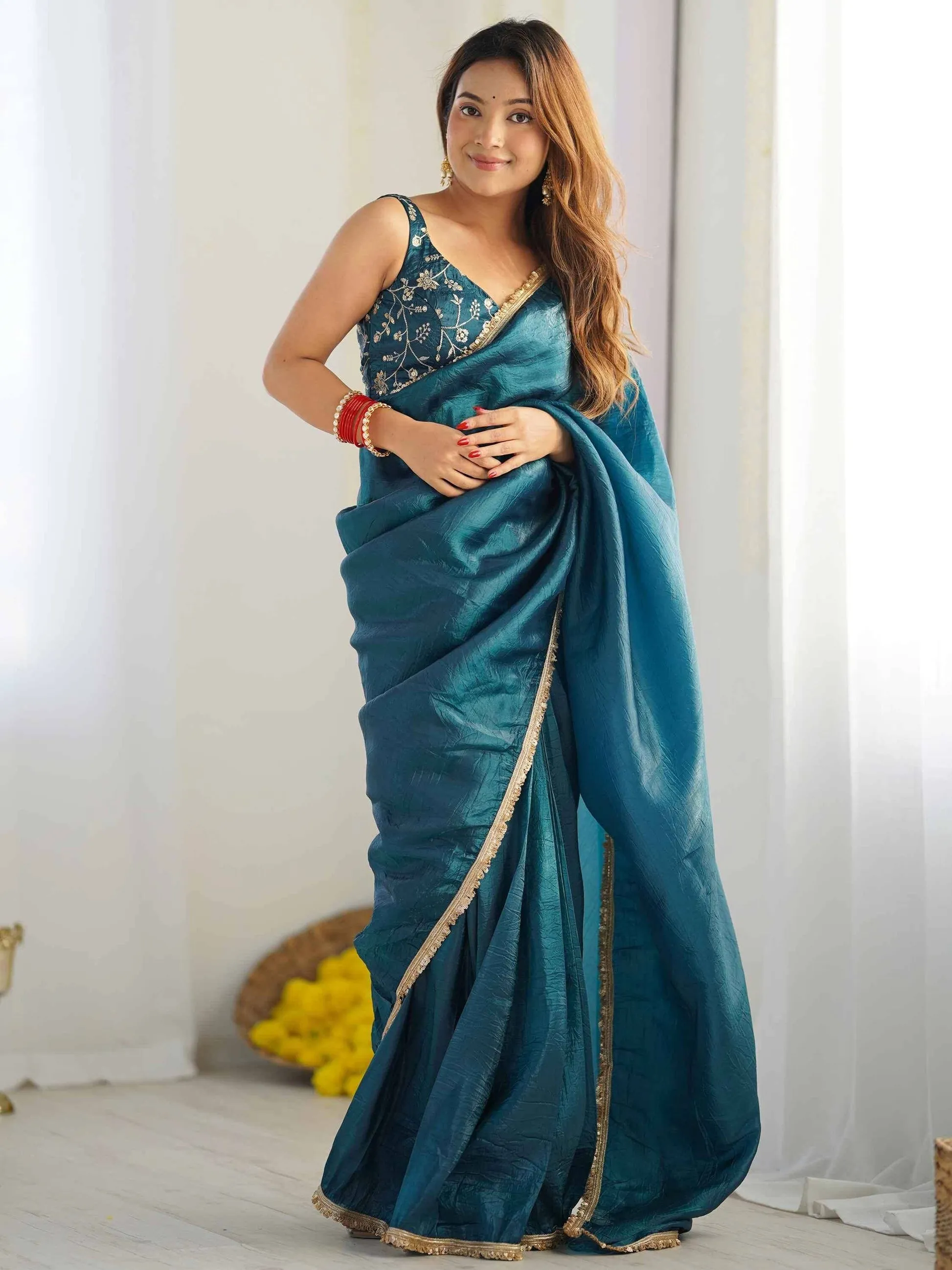
The phrase Pre-sticthed Saree sometimes appears in shopping descriptions, but it should prompt a practical question rather than settle the purchase. Prepared pleats, a stitched skirt silhouette and an included ready-made blouse are different features. Confirm which parts are actually finished on the specific product page, especially when the link leads to a broad saree collection. Ask how the waist closes and whether the pallu remains adjustable. A pre-arranged drape is useful only when its construction suits the dancer and the routine.
Choose Fabric That Moves Predictably
Georgette, chiffon, satin and organza can all appear in festive collections, yet they do not follow the body in the same way. A crisp fabric may hold a sculptural fold, whereas a softer one can swing during turns. Embroidery and lining also alter movement. If possible, test a sample length of comparable material at rehearsal. Watch what happens after the dancer stops spinning. The fabric should settle where the choreography expects it, instead of leaving someone to gather loose ends during the next cue.
Prepare a Safe Fastening Plan
Decide who will help with the costume change and where that person can stand without blocking the exit. Choose fastenings that are easy to locate by touch, and keep pins away from bare skin and delicate embroidery. The blouse should fit through raised arms and quick turns, not merely look smooth under stage lighting. Label each costume bag clearly and practise the change at performance speed. A few rehearsals can reveal whether a prepared drape truly saves time or creates new adjustments.
Rehearse With Every Costume Piece
Bring the jewellery, footwear and any separate waist layer to one full rehearsal. A pallu that stays secure with bare shoulders may catch when long earrings are added. Check the hem against the actual stage shoes, then make a full turn near another dancer to confirm spacing. Keep the emergency kit compact so helpers can find what matters immediately. These five preparations support the change without introducing unnecessary objects into a busy backstage area. Keep that kit away from stage exits.
-
Clearly labelled costume bag
-
Smooth spare fastenings
-
Stage shoes already tested
-
Accessory pouch kept separate
-
Helper assigned before cue
Allow Tradition Without Perfect Replication
Stage clothing can echo a traditional silhouette while adapting how the pleats are secured for performance. Agree on which visual details must stay authentic to the production, such as a border direction, colour arrangement or pallu placement. Discuss changes with the director or costume lead instead of quietly altering a shared design. A successful quick change respects the intended look while allowing the performer to move and breathe. Once the fastenings are tested, the focus can return to rhythm and expression.
Conclusion
The audience remembers the moment the performers arrive together, not the number of pleats that were arranged backstage. Choose a drape whose construction you understand and rehearse it through the actual changeover, including the blouse and shoes. If the silhouette survives a fast turn and a short exit without constant attention, it belongs in the performance. When the next cue sounds, the dancer should be ready to enter with the music rather than still searching for the loose end of a scarf.